

 डॉ. बी. आर. अम्बेडकर विश्वविद्यालय दिल्ली




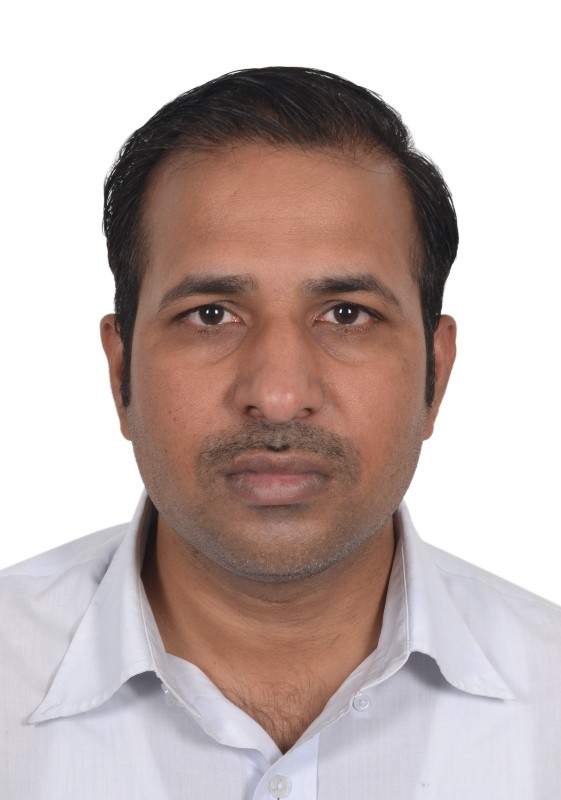
Affiliation
- Associate Professor , School of Human Ecology
-
rsingh2@aud.ac.in
- ORCID- ID- 0000-0001-8461-2327
- Ph. D. (2006 - 2011) In Environmental science from Department of Zoology and Environmental Science, Gurukula Kangari Vishwavidyalaya, Haridwar, India.
- Post Graduate Diploma in Remote Sensing and GIS (2004). Forestry and Ecology Division, Indian Institute of Remote Sensing, Dehradun.
- M.Sc in Ecology and Environmental science (2001-2003), Sikkim Manipal University, Gangtok, Sikkim, India.
- B. Sc. in Biological Science (1998 – 2000), Kurukshetra University, Kurukshetra, Haryana, India
- Head of Department and Associate Professor, at Department of Forestry and Wildlife, Amity Institute of Environmental Sustainability, Amity University Uttar Pradesh, Noida from 11th July to 7th October 2026.
- Assistant Director and Associate Professor at Amity Institute of Forestry and Wildlife, Amity University Uttar Pradesh, Noida from 01st June 2023 to 10th July 2026
- Assistant Professor at Amity Institute of Forestry and Wildlife, Amity University Uttar Pradesh, Noida from 29th December 2014 to 31st May 2023
- Deputy Manager at the Foundation for Ecological Security (FES), Gujarat, from 23rd September 2013 to 20th December 2014.
- Scientist Fellow at the G. B. Pant Institute of Himalayan Environment and Development (GBPIHED), Almora, Uttarakhand, from 04th November 2011 to 11th September 2013.
- Senior Research Fellow at Wildlife Institute of India, Dehradun from 28 April 2007 to 03rd November 2011.
- Junior Research Fellow at Wildlife Institute of India, Dehradun from 28 July 2005 to 27 April 2007.
- Carnivore Ecology and Conservation: Dr Singh has over 20 years of research experience working on carnivores’ ecology in semi-arid landscapes, beginning with long-term studies of the tiger in Ranthambhore Tiger Reserve. His work on tigers covers population dynamics, dispersal, reproduction, and survival, and he has extended it to leopards, caracals, striped hyenas, and sloth bears.
- Population Estimation and Wildlife Monitoring: His expertise includes estimating wildlife density and abundance and modelling site occupancy using non-invasive survey methods, particularly camera trapping and pugmark analysis. He has applied these methods to large as well as meso-carnivores. He also designs field surveys for diurnal raptors in arid landscapes. His work helps wildlife managers choose survey designs that are efficient, reproducible, and suited to the species and habitat being monitored
- Ecosystem Services and Human Dimensions of Wildlife: His research looks at how wildlife and people share landscapes, and what each gain from or costs the other. He has studied the ecosystem services that predators and scavengers provide in human-dominated areas, including the role of striped hyenas in removing carcasses and the value of raptors to farmers, such as predation on snakes of medical significance in the Thar Desert.
- Biodiversity finance and policy: He worked on biodiversity finance, using the BIOFIN framework to assess government investment in conservation and in protecting the biodiversity in central India. Together, these strands connect ecological evidence with social and economic realities, so that conservation planning is grounded in the needs of both wildlife and local communities
- Environmental Impact Assessment and Conservation Planning: Environmental and Social Impact Assessment for infrastructure projects. Biodiversity management plans, regional wildlife plans, and carrying capacity studies. Translating research findings into protected area management and policy recommendations.
- Bishnoi R, Tiwari G, Singh R (2026). The eagle as an agricultural ally: quantifying the predation of medically significant snakes and public perception gaps in the Thar Desert. Frontier in Bird Science 5:1897409. https://doi.org/10.3389/fbirs.2026.1897409
- Gupta J, Maurer G, Singh SK, Singh R (2026). What Defines the Habitat Use Pattern of Mountain Ungulate? A Case Study of Endemic Himalayan Tahr in Govind Pashu Vihar, Western Himalaya. Diversity 18(9): 547. https://doi.org/10.3390/d18090547
- Sharma S, Gupta J, Jain A, Panda D, Maurya KK, Singh R* (2026). Dietary Pattern and Trophic Resource Partitioning Among Sympatric Mesocarnivores in Human-Dominated Semi-Arid Landscape, Madhya Pradesh. Ecologies 7, 58. https://doi.org/10.3390/ecologies7020058
- Sharma S, Panda D, Jain A, Rajaraman R, Maurya KK, Singh R* (2026). Factors determining the occurrence and spatial association of meso-carnivores in the semi-arid landscape of Madhya Pradesh, India. Mammal Research 71, 5. https://doi.org/10.1007/s13364-025-00827-9
- Singh R*, Singh SK, Sharma R, Nigam P, Habib B, Goyal SP (2025). Use of bioclimatic region-specific single nucleotide polymorphism reveals cryptic long-distance dispersal of a female tiger from Terai Arc Landscape in northern to western India. Asian Journal of Conservation Biology,14(2), 175-182. https://doi.org/10.53562/ajcb.86538
- Lad B, Khudsar FA, Sharma A, Singh SK, Singh R* (2025). Investing in Sustainable Agriculture: What BIOFIN Reveals About Central India’s Efforts. Conservation. 5(3):51. https://doi.org/10.3390/conservation5030051
- Lad B, Khudsar FA, Sharma A, Singh R* (2025). Financing sustainability: Applying the BIOFIN framework to government investments in conserving native and indigenous livestock breeds in central India. PLoS One 20(8): e0330728. https://doi.org/10.1371/journal.pone.0330728
- Panda D, Mohanty S, Pandey P, Singh R* (2025). Scavenging event of sloth bear (Melursus ursinus) in the Semi-arid landscape of Rajasthan, India. Proceedings of Zoological Society https://doi.org/10.1007/s12595-024-00557-x
- Pop P, Pattanaik N, Barwal KS, Singh HP, Pandey P, Sondhi S, Singh R (2024). A checklist of moths in Bilaspur district, Himachal Pradesh, in the western Himalayan foothills, India. ENTOMON 49(3): 399-416. https://doi.org/10.33307/entomon.v49i3
- Rani M, Singh SK, Allen ML, Pandey P, Singh R. (2024). Measuring the attitudes of people toward the conservation of Leopard Panthera pardus (Mammalia: Carnivora) in the foothills of Himalayan region. Journal of Threatened Taxa 16(6): 16(6): 25283–25298. https://doi.org/10.11609/jott.8567.16.6.25283-25298
- Rani M, Panda D, Allen ML, Pandey P, Singh R*, Singh SK. (2024). Assessment and prediction of human-elephant conflict hotspots in the human-dominated area of Rajaji-Corbett landscape, Uttarakhand, India. Journal for Nature Conservation 79. https://doi.org/10.1016/j.jnc.2024.126601
- Li, H, Pandey P, Li Y, Wang T, Singh R, Peng Y, Lee H, Lee W, Zhu W, Choi C. (2024). Transboundary Cooperation in the Tumen River Basin Is the Key to Amur Leopard (Panthera pardus) Population Recovery in the Korean Peninsula. Animals 2024, 14, 59. https://doi.org/10.3390/ani14010059
- Sehgal JJ, Kumar D, Kalsi R, Singh R. (2023). Leopard and wild boar sharing a rare meal in the Shiwalik foothills, Himalayas. Cat News 78, 17–19.
- Deomurari A, Sharma A, Ghose D, Singh R* (2023). Potential range map dataset of Indian Birds. Data 8(9), 144; https://doi.org/10.3390/data8090144
- Panda D, Krishna J.S, Sharma A, Pandey P, Lee H, Singh R* (2023). Ecosystem services provided by striped hyenas in the human-dominated landscape of Rajasthan, India. Science of the Total Environment (903)166267. https://doi.org/10.1016/j.scitotenv.2023.166267
- Tiwari G, Pandey P, Kaul R, Singh R* (2023). Farmers’ perception of the ecosystem services provided by diurnal raptors in arid Rajasthan. Peer J 11: e15996. https://doi.org/10.7717/peerj.15996
- Panda D, Sharma S, Mohanty S, Kumar A, Suryan T, Shukla M, Pandey P, Lee H, Singh R* (2023). Dietary preference of striped hyena in the anthropogenic landscape of Rajasthan, India. Acta Ecologica Sinica, 43 (6) 1067-1073. https://doi.org/10.1016/j.chnaes.2023.03.002
- Sehgal J, Panda D, Kumar D, Kalsi RS, Allen ML, Singh R* (2023). Does the size of a protected area matter? An assessment of leopard population and habitat usage in a protected area of Shiwalik foothills, Himalaya. Mammal Research. 68(4), 459–469. https://doi.org/10.1007/s13364-023-00701-6
- Chauhan M, Singh R, Pandey P. (2023). Modeling the Spatial Distribution of Black-Necked Cranes in Ladakh Using Maximum Entropy. Proceedings of the National Institute of Ecology of the Republic of Korea, 4(2) 79-85. https://doi.org/10.22920/PNIE.2023.4.2.79
- Singh R*, Pandey P, Qureshi Q, Sankar K, Krausman PR, Goyal SP (2023). Estimating population density of leopard in semi-arid habitat, western India. Proceedings of the National Institute of Ecology of the Republic of Korea, 4(2), 72-78. https://doi.org/10.22920/PNIE.2023.4.2.72
- Deomurari A, Sharma A, Ghose D, Singh R* (2023). Projected Shifts in Bird Distribution in India under Climate Change. Diversity,15(3):404. https://doi.org/10.3390/d15030404
- Panda D, Mohanty S, Allen ML, Dheer A, Sharma A, Pandey P, Lee H, Singh R* (2023). Competitive interactions with dominant carnivores affect carrion acquisition of striped hyena in a semi-arid landscape of Rajasthan, India. Mammal Research (68): 129–141. https://doi.org/10.1007/s13364-022-00663-1
- Tiwari G, Pandey P, Kaul R, Lee H, Singh R* (2023). Time-of-day bias in diurnal raptors in arid region of Rajasthan. Acta Ecologica Sinica 43(3) 545-559. https://doi.org/10.1016/j.chnaes.2022.07.005
- Kaul R, Kalsi R, Singh R, Basnet H, Naeem AM (2022). Cheer Pheasant (Catreus wallichii) and the Conservation Paradox - Importance of Unprotected Areas. Diversity 14(10): 785. https://doi.org/10.3390/d14100785
- Singh R*, Pandey P, Qureshi Q, Sankar K, Krausman PR, Goyal SP (2022). Temporal Variation in Tiger Population in a Semi-Arid Habitat in India. Proceedings of the National Institute of Ecology of the Republic of Korea, 3(3), 154-164. https://doi.org/10.22920/PNIE.2022.3.3.1
- Pop P, Barwal KS, Puneet Pandey, Singh HP, Singh R. (2022). Back after 40 years: a rare sighting of Eurasian Siskin Spinus spinus (Linnaeus, 1758) (Aves: Passeriformes: Fringillidae) in Himachal Pradesh, India. Journal of Threatened Taxa. 14 (4), 20935–20938. https://doi.org/10.11609/jott.7779.14.4.20935-20938.
- Panda D, Mohanty S, Suryan T, Pandey P, Lee H, Singh R* (2022). High striped hyena density suggests coexistence with humans in an agricultural landscape, Rajasthan. PloS One17(5): e0266832. https://doi.org/10.1371/journal.pone.0266832.
- Sehgal J, Kumar D, Kalsi RS, Allen ML, Singh R* (2022). Spatio-temporal overlap of leopard and prey species in the foothills of Shiwalik, Himalaya. European Journal of Wildlife Research 68(18). https://doi.org/10.1007/s10344-022-01568-9.
- Sabu MM, Pasha SV, Reddy CS, Singh R, Jaishanker R (2022). The effectiveness of Tiger Conservation Landscapes in decreasing deforestation in South Asia: a remote sensing-based study. Spatial Information Research (30), 63-75. https://doi.org/10.1007/s41324-021-00411-8
- Tiwari G, Pandey P, Kaul R, Lee H, Singh R* (2021). Comparison of point and roadside transect methods to evaluate the abundance and richness of diurnal raptors in the arid region of Rajasthan. PLoS One 16(12): e0259805. https://doi.org/10.1371/journal.pone.0259805
- \Hyun JY, Pandey P, Kim KS, Chon A, Jeong D, Bhak J, Yu M, Song HK, Singh R, Min MS, Goyal SP, Bayarkhagva D, Marchenkova T, Vitkalova A, Lee H (2021). Whole genome survey of big cats (Genus: Panthera) identifies novel microsatellites of utility in conservation genetic study. Scientific Reports 11(1), 1-14, 14164. https://doi.org/10.1038/s41598-021-92781-0
- Singh R*, Pandey P, Qureshi Q, Sankar K, Krausman PR, Goyal SP (2021). Philopatric and natal dispersal of tigers in semi-arid habitat, western India. Journal of Arid Environments. 184 https://doi.org/10.1016/j.jaridenv.2020.104320
- Singh R*, Krausman PR, Pandey P, Maheshwari A, Rawal RS, Sharma S, Shekhar R (2020). Predicting habitat suitability of snow leopards in the western Himalayan Mountains, India. Biology Bulletin, Vol 47 (6), 655-664. https://doi.org/10.1134/S106235902101012X
- Singh R*, Pandey P, Qureshi Q, Sankar K, Krausman PR, Goyal SP (2020). Acquisition of Vacated Home Ranges by Tigers. Current Science Vol. 119 (9) 1549-1554. http://doi.org/10.18520/cs/v119/i9/1549-1554
- Dalui S, Khatri H, Singh SK, Basu S, Ghosh A, Mukherjee T, Sharma LK, Singh R, Chandra K, Thakur M (2020). Fine-scale landscape genetics unveiling contemporary asymmetric movement of red panda (Ailurus fulgens) in Kangchenjunga landscape, India. Scientific Reports 10, 15446. https://doi.org/10.1038/s41598-020-72427-3
- De R, Joshi BD, Shukla M, Pandey P, Singh R, and Goyal SP (2019). Understanding predation behaviour of the tiger (Panthera tigris tigris) in Ranthambore tiger Reserve, Rajasthan, India: use of low-cost gel based molecular sexing of prey hairs from scats. Conservation Genetics Resources 11, (1) 97–104.
- Pandey P, Goel D, Singh R, Singh SK, and Goyal SP (2018). Use of molecular based approach in resolving subspecies ambiguity of the rescued tiger cubs from Arunachal Pradesh, India and their relationship with other populations. Current Science 114(10) 2362-2368.
- Singh SK, Aspi J, Kvist L, Sharma R, Pandey P, Mishra S, Singh R, Agrawal M, Goyal SP (2017). Fine-scale population genetic structure of the Bengal tiger (Panthera tigris tigris) in a human-dominated western Terai Arc Landscape, India. PloS One 12 (4): e0174371. doi.org/10.1371/journal. pone.0174371
- Singh R*, Krausman PR, Goyal SP and Chauhan NPS (2015). Factors contributing losses of tigers in Ranthambhore Tiger Reserve, India. Wildlife Society Bulletin, 39(3):670–673.
- Singh R*, Qureshi Q, Sankar K, Krausman PR, Goyal SP (2015). Estimating occupancy and abundance of caracal in a semi-arid habitat, western India. European Journal of Wildlife Research, 61 (6): 915-918.
- Singh R*, Nigam P, Qureshi Q, Sankar K, Krausman PR, Goyal SP and Nicolson KL (2015). Characterizing human–tiger conflict in and around Ranthambhore Tiger Reserve, western India. European Journal of Wildlife Research, 61: 255-261.
- Singh R*, Krausman PR, Qureshi Q, Sankar K, Goyal SP, Tripathi A (2014) First parturition of tigers (Panthera tigris) in a semi-arid habitat, western India. European Journal of Wildlife Research 60: 383-386.
- Singh R*, Qureshi Q, Sankar K, Krausman PR, Goyal SP (2014) Population and habitat characteristics of the caracal semi-arid landscape, western India. Journal of Arid Environments, 103: 92-95.
- Hari PR, Reddy CS, Singh R and Jha CS (2014). Landscape level analysis of Disturbance regimes in Protected Areas of Rajasthan, India. Journal of Earth System Sciences, 123(3), 467-478.
- Singh R*, Qureshi Q, Sankar K, Krausman PR, Joshi BD, Goyal SP (2014). Distinguishing sex of free-ranging tigers using pugmark measurements. Italian Journal of Zoology, 81(2): 304-309.
- Singh R*, Qureshi Q, Sankar K, Krausman PR, Goyal SP (2014). Reproductive characteristics of Female Bengal tigers, Ranthambhore Tiger Reserve, India. European Journal of Wildlife Research, 60(4): 579-587.
- Singh R*, Qureshi Q, Sankar K, Krausman PR, Goyal SP and Nicolson KL (2014). Population density of striped hyenas in relation to habitat in a semi-arid landscape, western India. Acta Theriologica 59: 521-527.
- Singh R*, Chauhan DS, Mishra S, Krausman PR, Goyal SP (2014). Tiger density in tropical lowland forest of Eastern Himalayan Mountains. Springer Plus, DOI: 10.1186/2193-1801-3-462.
- Singh R*, Nigam P, Qureshi Q, Sankar K, Krausman PR, Goyal SP (2014). Strategy of female tigers to avoid infanticide. Current science 107 (9): 1595-1597.
- Singh R*, Qureshi Q, Sankar K, Krausman PR, Goyal SP (2014). Evaluating heterogeneity of sex-specific capture probability and precision in camera-trap population estimates of tigers. Wildlife Society Bulletin, 38(4) 791-796.
- Singh R, Mazumdar A, Sankar K, Qureshi Q, Goyal SP, Nigam P (2013) Interbirth interval and litter size of free-ranging Bengal tiger (Panthera tigris tigris) in dry tropical deciduous forests of India. European Journal of Wildlife Research 59: 629-636.
- Singh R*, Qureshi Q, Sankar K, Krausman PR, Goyal SP (2013) Use of camera traps to determine dispersal of tigers in semi-arid landscape, western India. Journal of Arid Environments 98: 105-108.
- Singh R*, Nigam P, Goyal SP, Joshi BD, Sharma S, Shekhawat RS (2011). Survival of dispersed orphaned tiger cubs (Panthera tigris tigris) In fragmented habitat of Ranthambhore Tiger Reserve in India. Indian Forester, 137(10), 1171-1176.
- Singh R, Joshi PK, Kumar M, Dash PP, Josh BD (2009) Development of Tiger Habitat Suitability Model using Geospatial Tools – A case study in Achanakmar Wildlife Sanctuary (AMWLS), Chhattisgarh India. Environmental monitoring and assessment, 155, 555-567.
Principle Investigator
- Ecological monitoring and conservation of caracal (Caracal caracal) in Kuno Landscape Madhya Pradesh India (2023-2026). Funded by Madhya Pradesh State Biodiversity Board, Madhya Pradesh. (13.00 Lakhs).
- Spatial ecology and ecosystem services of striped hyena in relation to land use pattern in Rajasthan, India (2018-2022). Funded by Science and Engineering Research Board, Department of Science and Technology, Government of India (26.322 Lakhs).
- Extinct or alive; re-investigating the distribution of Critically Endangered Himalayan Quail in India (2018-2019). Funded by Mohamed bin Zayed Species Conservation Fund (5900.00 $US converted to INR of 3.70 Lakhs).
- Assessing the population status, ecology, and conservation of caracal in the selected protected area of semi-arid habitat region of Rajasthan, India (2015-2016). Funded by Panthera, USA (10,000.00 $US, converted to INR of 6.58 Lakhs).
Co-Investigator
- High resolution spatial mapping of bird phenology as an indicator of ecosystem health in relation to climate change in Himalaya (2019-2022). National Mission on Himalayan Studies (NMHS), Ministry of Environment, Forest and Climate Change, Government of India (39.901 Lakhs). GBPNI/NMHS-2019-20/SG.
- Bird diversity, and factors influencing their distribution in Ratapani Tiger Reserve, Madhya Pradesh, India (2022-2023). Funded by Madhya Pradesh State Biodiversity Board, Madhya Pradesh. (2.00 Lakhs)
- Understanding impact of anthropogenic activity on fine scale population genetics structure of Himalayan Tahr (Hemitragus jemlahicus) in Uttrakhand India: conservation implication (2023-2026). Funded by Anusandhan National Research Foundation (ANRF), Government of India (23.804 Lakhs).
Consultancy project
- Preparation of Biodiversity Management Plan, Regional Wildlife Plan and Carrying Capacity Study for the Makum Coal Fields in Assam (2016-2017). Funded by Rain Forest Research Institute, Assam, India (7 Lakhs).
Research Supervision:
Doctor of Philosophy (Wildlife Sciences) with Amity University
|
Name of research Scholar |
Title |
Date of registration |
Status |
|
Dr Govind Tiwari |
Ecological Dynamics of Raptors in Relation to Resource Availability and Landuse Pattern in Rajasthan |
14th July 2017 |
PhD thesis Awarded in 2023 |
|
Dr Debashish Panda |
Ecology and Ecosystem Services of Striped Hyena in and Around the Sawai Mansingh Wildlife Sanctuary, Rajasthan |
19th July 2019 |
PhD thesis Awarded in 2023 |
|
Dr Arpit Deomurari |
Modeling Shifts in Avian Distribution Under Climate Change Scenarios for Prioritizing Conservation Areas |
14th July 2017 |
PhD thesis Awarded in 2024 |
|
Dr Bakul Lad |
Study on Resource Mobilization and Mainstreaming Biodiversity in Selected Sectors of Govt of MP for Biodiversity Conservation |
01st Sept 2020 |
PhD thesis Awarded in 2025 |
|
Mr Shantanu Sharma |
Ecology of Meso-carnivores in Human-Dominated regions of Kuno-Chambal Landscape, India |
10th Feb 2023 |
Pre-Thesis submitted |